A Birth, a Bereavement, and the Essence of Snoop Dogg

Tech needs better definitions
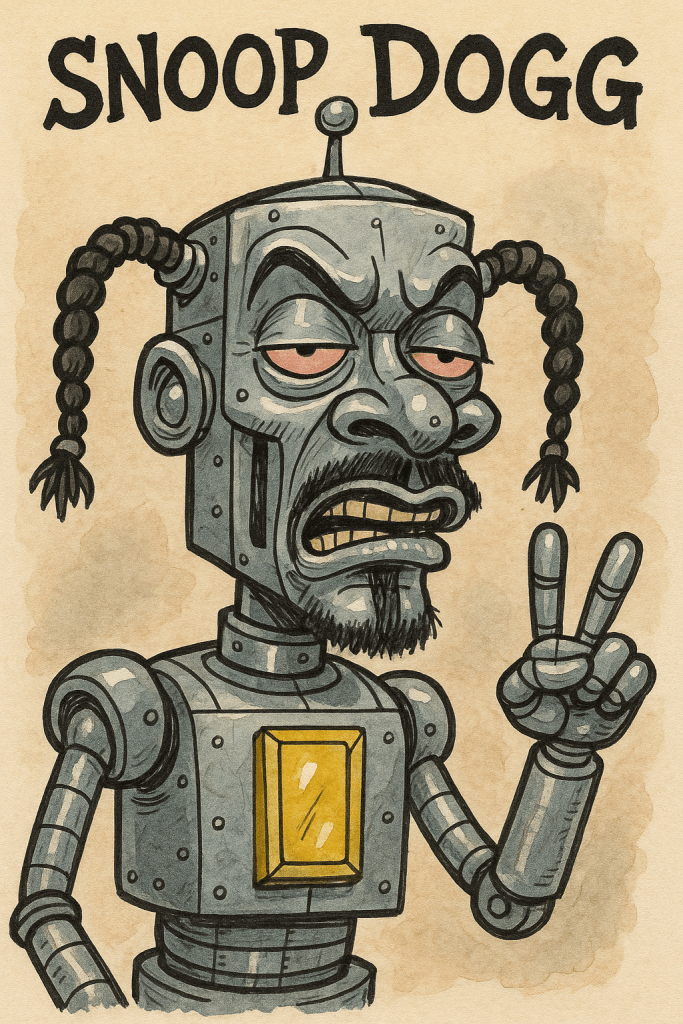
Dall-E at it’s absolute finest

As the curtain fell on 2024, I had a baby. It was Friday the 13th, a date often associated with bad luck thanks to European superstitions stretching back a couple of hundred years. There is even a specific term to describe the “fear of Friday the 13th”: paraskevidekatriaphobia. Although urban legend actually has it that the shrink that coined it declared anyone who learned to pronounce it would be cured, which suggests a sense of humor (and reminds us how extra humans can be…).

And while my husband and I likewise noted the date as a humoress quirk, bad luck would, in fact, catch-up with us. Just five weeks later my Dad died. Baz Luhrman was onto something when he said the real troubles in life blindside you on an idle Tuesday afternoon.

Though he’d been ill for a while my father’s passing wasn’t expected, and I found myself in the strange and bewildering position of both gaining and losing a fundamental life force in such quick succession that it felt simultaneous. In the paperwork and aftermath, I occasionally confused my father’s DOD for our baby’s DOB. Those who have had similar experiences may relate to the feeling of being in some strange existential continuum, whereby it seems impossible that there wasn’t some kind of transfer. Like one Dr. Who fluidly regenerating into the next

Continue reading

Missives from Cannes: Three Observations on Gen AI Application

Enthusiasm abounded at the World AI Cannes Festival

La Croisette de Cannes dans les années 1930

By now, we’re well-accustomed to waves of tech-based fervor. You don’t really have to touch the industry to have become a cynic. Perhaps you remember “peak blockchain” in 2019, when the technology was integrated into a toothbrush for reasons that no-one will ever begin to understand?

And of course, we’ve endured fanfare and furor over the metaverse, XR, Big Data, crypto, Web3, NFTs, quantum computing and, most notably, we’ve seen AI grow legitimate roots as the defining technology of its era (while its name continues to be frequently used and abused by sneaky bandwagon jumpers…).  

On those firm foundations, generative AI is the term at the center current hype-cycle. In Cannes last week a reported 16,000 attendees swarmed on the famed Palais des Festivals et Des Congrès to learn about it, talk about it, and – for many – showcase the tentative steps they’ve taken towards real-world application.

As with previous seasons, there was an urgency (perhaps even a whiff of desperation…?) in the air as companies from industries as diverse as hospitality, finance, entertainment, marketing, and pharma joined this latest gold rush as hopefuls. And, unsurprisingly, both snake oil and substance could be found.

I was lucky enough to host the festival’s Applications Stage, and here are three broad-brush observations I made:

Continue reading

Raising Baby AI in 2024

Davos 2024 convened a panel of experts to terrify and reassure us in equal measure

Image created by Dall-E 2

You’d have to be living under a rock to entirely swerve the avalanche of AI predictions for 2024. They typically fall into three camps – extreme AI optimism, extreme AI pessimism, and a sort of vanilla-flavored corporate edition whereby the author safely predicts things that are already happening.

Much more interesting was a meeting at Davos 2024 yesterday, where a panel of undisputed AI silverbacks gathered to discuss the trajectory of AI’s sexiest zeitgeist – large language models (LLMs).

Continue reading

Here Are Five Reasons Consumers Won’t Buy Your Smart Home Device

This blog was originally posted on the Hill + Knowlton Strategies website.

This image has an empty alt attribute; its file name is Hl3QN85Gk5yd72A0J5GBI-kZ9DeAyDBAHOEFcMaTu5pXWXBpxdN16bgst-RwRs7O_2Nl3p3OGmi_Tv62ecEZ1cgEriJyW-SSJTG7IgA2IEZsIvzhKVGR4TtZiqBZE0qKNwGc-lBH
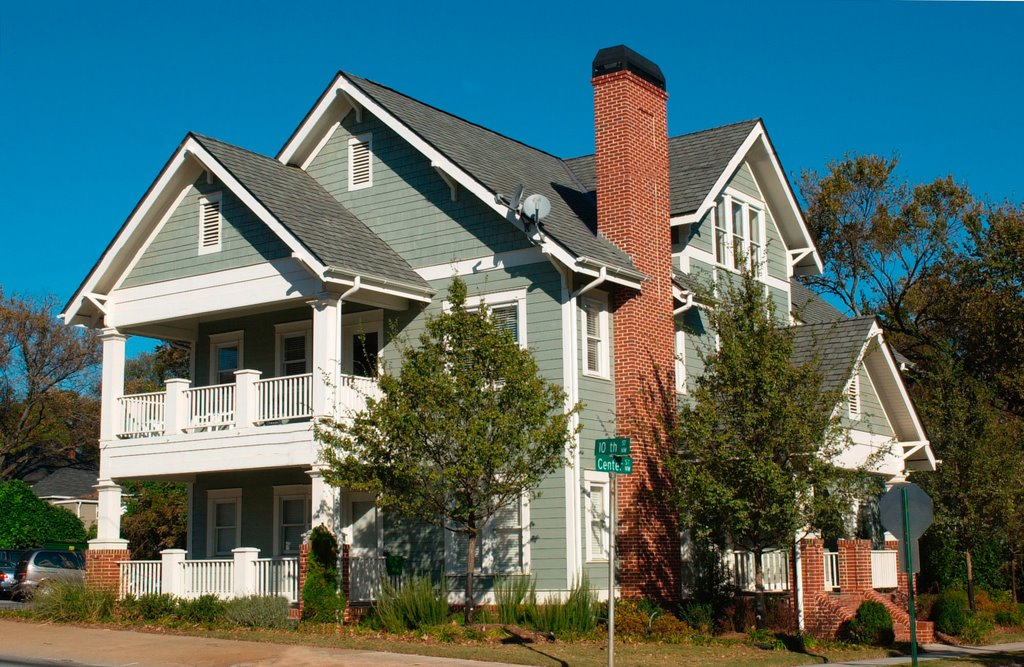
The Aware Home

In 2000, a group of researchers at Georgia Tech launched a project they called “The Aware Home.” The collective of computer scientists and engineers built a three-story experimental home with the intent of producing an environment that was “capable of knowing information about itself and the whereabouts and activities of its inhabitants.” The team installed a vast network of “context aware sensors” throughout the house and on wearable computers worn by the home’s occupants. The hope was to establish an entirely new domain of knowledge — one that would create efficiencies in home management, improve health and well-being, and provide support for groups like the elderly.

Continue reading