
Founder of YouTheData.com, Fiona J McEvoy, is interviewed for RE•WORK’s Women in AI Podcast: Episode #30.
Founder of YouTheData.com, Fiona J McEvoy, is interviewed for RE•WORK’s Women in AI Podcast: Episode #30.
This article was originally written for the RE•WORK guest blog. This week YouTheData.com founder, Fiona McEvoy, will speak on a panel at the San Francisco Summit.

The world is changing, and that change is being driven by new and emerging technologies. They are evolving the way we behave in our homes, work spaces, public places, vehicles, and with respect to our bodies, pastimes, and associates. All the time we are creating new dependencies, and placing increasing amounts of faith in the engineers, programmers and designers responsible for these systems and platforms.
As we slowly begin to delegate tasks that have until now been the sole purview of human judgment, there is understandable trepidation amongst some factions. Will creators build artificially intelligent machines that act in accordance with our core human values? Do they know what these moral imperatives are and when they are relevant? Are makers thoroughly stress-testing deep learning systems to ensure ethical decision-making? Are they trying to understand how AI can challenge key principles, like dignity and respect?
What The Google Duplex Debate Tells Us
“As we march further into a world in which human-AI distinctions are blurred, we need to ask whether we are comfortable chasing this kind of dupe… Just how important is it that our conversational bots sound exactly like real humans?” Read more.
What Are Your Augmented Reality Property Rights?
“We were unprepared for many of the consequences of social media. Now is the time to address the many questions raised by the coming ubiquity of augmented reality.” Read more.
If you’d like to feature a contributor post on your blog or news site, please contact us here.

It may not seem like it, but there is quite an arms race going on when it comes to interactive AI and virtual assistants. Every tech company wants their offering to be more intuitive…more human. Yet although they’re improving, voice activated tech like Alexa and Siri are still pretty clunky, and often underwhelming in their interactions.
This obviously isn’t great if developers want to see them entering the workplace in such a way as to supercharge sales. Continue reading
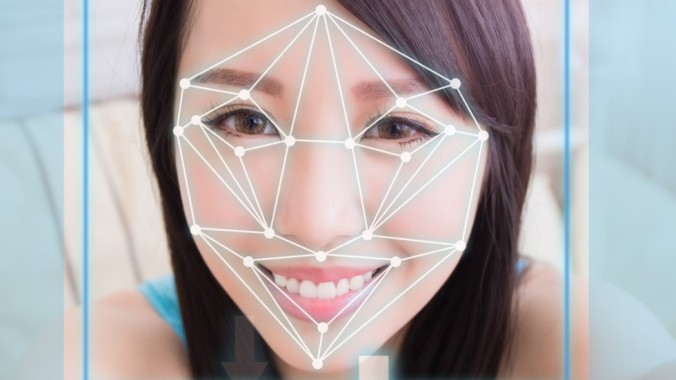
Predictive, data-driven software is becoming ubiquitous, and as such our reliance upon it is steadily intensifying. The locus of knowledge is becoming external to us again for the first time since the onset of humanism in the 18th century, and we increasingly prefer the forecasts of artificially intelligent systems to our own experience or intuition.
Of all the arenas in which these predictions fascinate and compel our decision-making, perhaps the most prevalent are those that see algorithms foretell the behaviors of our fellow human beings. What they prefer, what they react to, where they go, who they’ll flirt with, whether they’re likely pay back a loan, or even commit a crime.
Quite simply, we are coming to believe that machines know us better than we can know ourselves. Continue reading
The rise and rise of tech, and the popularity of shows like Altered Carbon, is placing the idea of augmented humanity front-and-center. So-called “body hacking” is already popular enough to have its own annual convention, and well-respected AI pioneers like Siri inventor Tom Gruber have been evangelizing about technology that can, and will, be used to help humans achieve superhuman levels of cognitive function. Giving a TED Talk last year, Gruber asked: Continue reading
YouTheData.com is delighted to feature a guest post by John Gray, the co-founder of MentionMapp Analytics.

Love them or can’t stand them, cats and memes have clawed their way into our cultures. Undoubtedly there’s a hieroglyphic cat meme etched on a wall somewhere in the historical ruins of Egypt. Believing otherwise, is to suggest that ancient peoples were humorless. Amusement, cats and memes aren’t new cultural considerations, just like today’s misinformation problem – popularized as “fake news” – isn’t either.
As William Faulkner said: “The past is never dead. It’s not even past.” We can’t escape the history of information and communication technologies, but we can choose to blithely ignore it’s evolution and the subsequent cultural, social, and political impact. Continue reading

Fraudsters typically line their pockets by forging our signatures, cloning our credit cards, and stealing our personal identities. Yet, we’d like to think that folks who know us personally – our family, friends, colleagues, and acquaintances – would catch these counterfeiters out if they brazenly claimed to be us in public. After all, seeing is believing isn’t it? If you don’t look like me, you’re not me. If you do look like me, the chances are that you are me. Right?
Well…maybe. And this could soon become the subject of some confusion.
But how?
Well, imagine if stealing your identity could include stealing your image. And if scammers could then use that image to put words in your mouth and – in some cases – fake your very actions. This isn’t just some outlandish thought experiment, but a foreseeable hazard if we fail to prepare for a surge in the production of “deepfakes”. Continue reading

The Cottingley Fairies
As humans, we are accustomed to suspending our disbelief. Indeed, we’re known to indulge in it. Each time we dive into a book, a movie, a video game, a TV show – even a spiritual flight-of-fancy – most of us are willing and able to disengage from the pedantry of our everyday judgment, and allow ourselves to be convinced by things that are less-than-absolutely-convincing…
This coaxing is a consensual arrangement. I allow you to present me with the improbable on the proviso that it is entertaining, or educational, or uplifting, or philosophical – i.e. my pay-off is that I am emotionally stimulated in some way. I don’t need to scrutinize a movie in its every detail, what is important when I watch it is that I enjoy it and it makes me happy (or scared, or angry, or sentimental!). Continue reading
It’s difficult to read, or even talk about technology at the moment without that word “ethics” creeping in. How will AI products affect users down-the-line? Can algorithmic decisions factor in the good of society? How might we reduce the number of fatal road collisions? What tools can we employ to prevent or solve all crime?
Now, let’s just make it clear from the off: these are all entirely honorable motives, and their proponents should be lauded. But sometimes even the drive toward an admiral aim – the prevention bad consequences – can ignore critical tensions that have been vexing thinkers for years.
Even if we agree that the consequences of an act are of real import, there are still other human values that can – and should – compete with them when we’re assimilating the best course of action. Continue reading
 You The Data