Will Facebook push non-sponsored content to the margins?

facebook

Facebook are currently running trials which demote non-promoted content to a secondary feed, according to the Guardian. The experiment is being run in six countries – including Slovakia, Serbia, and Sri Lanka – and apparently follows calls from users who want to be able to see their friends’ posts more easily.  The test involves two feeds, with the primary feed exclusively featuring posts by friends alongside paid-for content.

Already smaller publishers, Facebook pages, and Buzzfeed-like sites which rely upon organic social traffic, are reporting a drop in engagement of 60-80%.

The article says:

“Notably, the change does not seem to affect paid promotions: those still appear on the news feed as normal, as do posts from people who have been followed or friended on the site. But the change does affect so called “native” content, such as Facebook videos, if those are posted by a page and not shared through paid promotion.”

Experts predict that the move will hit much of the current video content which makes it into our feeds, plus the likes of the Huffington Post and Business Insider. Quite simply, Facebook seems to want to cleanse our feeds of low value content, and encourage media outlets to pay up…

Though the social media platform states it has no plans to roll this out globally, we might reasonably assume that this trial serves some purpose. And who can blame Facebook for experimenting, given the backlash they’ve had recently over so-called “fake news”? The trouble is, here we have another example of an internet giant acting to narrow our online field of vision: if we are only served promoted content, then we are served a skewed and unrepresentative view of the world. The dollar dictates, rather than organic enthusiasm…

Additionally, though our feeds are often cluttered with fake news, mindless cat videos and other questionable content, amongst non-promoted material we also find important movements. These range from social campaigns and awareness drives, to challenging and diverse voices that diverge from mainstream opinion. Some are pernicious, but many are precious, and Facebook ought to be careful they don’t throw the baby out with the bath water.

It’s an admirable thing to respond to the wants and needs of users, and we shouldn’t be too quick to criticize Facebook here. We just need to be sure that giving clarity doesn’t mean imposing homogeneity.

Life imitating art: China’s “Black Mirror” plans for Social Credit System

social credit system

Yesterday, both Wired and the Washington Post wrote extensively about plans the Chinese government have to use big data to track and rank their citizens. The proposed Social Credit System (SCS) is currently being piloted with a view to a full rollout in 2020. Like a real-life episode of Charlie Brooker’s dystopian Black Mirror series, the new system incentivizes social obedience whilst punishing behaviors which are not deemed becoming of a “good citizen”. Here’s the (terrifying) run down:

  • Each citizen will have a “citizen score” which will indicate their trustworthiness. This score will also be publicly ranked against the entire population, influencing prospects for jobs, loan applications, and even love.
  • Eight commercial partners are involved in the pilot, two of which are data giants with interests in social media and messaging, loans, insurance, payments, transport, and online dating.
  • Though the “complex algorithm” used to generate a score by partner Sesame Credit has not been revealed, we do know there are five factors being taken into account:
    1. Credit history
    2. Ability to fulfil contract obligations
    3. The verification of “personal characteristics” (e.g. phone number, address etc.)
    4. Behavior and preference
    5. Interpersonal relationships
  • “Behavior and preferences” considers patterns of behavior and how they reflect upon the individual. For example, someone who plays ten hours of video games each day would be considered idle, whereas someone who buys lots of diapers would be considered a responsible parent.
  • “Interpersonal relationships” allows assessors to rate interactions between friends and family. Nice messages about the government are likely to help your score, but it can also be negatively affected by things your friends post online.

Black mirror

How do incentives work?

Well, just like the “NoseDive” episode of Black Mirror, there big benefits for model citizens:

  • 600 points: Congrats! Take out a Just Spend loan of up to 5,000 yuan (for use on the scheme’s partner sites).
  • 650 points: Hurrah! You can rent out a car without placing a deposit, experience faster check-ins at hotels and even experience VIP check-in at Beijing Airport.
  • 666 points +: There’s nothing sinister about this threshold! Enjoy! You can take out a loan of up to 50,000 yuan (from a partner organization).
  • 700 points: Yowzers! You can go to Singapore without armfuls of supporting documentation.
  • 750 points: Big dog! You can be fast-tracked in applying for a pan-European Schengen visa.

What about bad citizens?

If you fall short of government expectations, you can expect to know about it. Here’s how they plan to lower your quality of life:

  • Difficulty renting cars
  • Poor employment opportunities (including being forbidden from some jobs)
  • Issues borrowing money from legitimate lenders
  • Slower internet speeds
  • Restricted access to restaurants, nightclubs and golf clubs
  • Less likely to get a date (high points profiles are more prominent on dating websites)
  • Removal of the right to travel freely abroad
  • Problems with securing rental accommodation
  • Restrictions enrolling children in certain schools

You can read more detail and commentary here, but I’ve tried to present the basics.

This system takes no excuses and makes no effort to collect feedback. If, unpreventably, your score suffers a knock, then it is simply “tough luck”. It’s not difficult to see how it will entrench disadvantage and, in all likelihood, create a delineated two-tier society.

If someone you’re connected to (perhaps a relative) reduces your score by behaving “inappropriately” online or over a messenger, this could lead to your being denied a job, which in turn will reduce your chances of gaining credit, getting a rental apartment, a partner…etc etc. It’s difficult to escape the domino effect or imagine how an individual might recover enough to live a decent life in a system where each misdemeanor seems to lead to another compounding circumstance.

We can legitimately speculate that Chinese society, from 2020, will be one in which citizens heavily police each other, disconnect themselves (in every way) from the poor/low-scoring, report indiscretions at the drop of a hat for fear of association and reprisals, and adopt phoney behaviors in order to “game” their way to full state approval. Some have described it as a form of “nudging”, but nudge techniques still leave room for choice. This seems much more coercive.

Finally, some have argued that, although the Chinese SCS system seems extreme, it actually employs techniques that are already being used by internet giants to map our own behaviors as we speak. The Chinese system simply adds a positive or negative valence to these actions and distills them into a single score. Therefore, it is worth considering which elements of SCS we find unpalatable – if any at all – and reflecting upon whether we already assent to, or participate in, similar evaluations already…

Five concerns about government biometric databases and facial recognition

face recognition

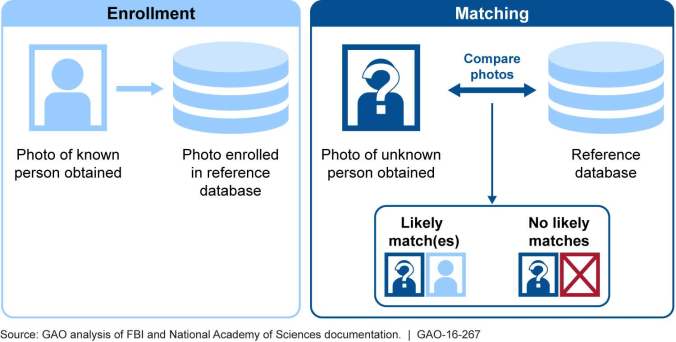
Last Thursday, the Australian government announced its existing “Face Verification Service” would be expanded to include personal images from every Australian driver’s license and photo ID, as well as from every passport and visa. This database will then be used to train facial recognition technology so that law enforcers can identify people within seconds, wherever they may be – on the street, in shopping malls, car parks, train stations, airports, schools, and just about anywhere that surveillance cameras pop-up…

Deep learning techniques will allow the algorithm to adapt to new information, meaning that it will have the ability to identify a face obscured by bad lighting or bad angles…and even one that has aged over several years.

This level of penetrative surveillance is obviously unprecedented, and is being heavily criticized by the country’s civil rights activists and law professors who say that Australia’s “patchwork” privacy laws have allowed successive governments to erode citizens’ rights. Nevertheless, politicians argue that personal information abounds on the internet regardless, and that it is more important that measures are taken to deter and ensnare potential terrorists.

However worthy the objective, it is obviously important to challenge such measures by trying to understand their immediate and long-term implications. Here are five glaring concerns that governments mounting similar initiatives should undoubtedly address:

  1. Hacking and security breaches

The more comprehensive a database of information is, the more attractive it becomes to hackers. No doubt the Australian government will hire top security experts as part of this project, but the methods of those intent on breaching security parameters are forever evolving, and it is no joke trying to mount a defense. Back in 2014 the US Office of Personnel Management (OPM) compromised the personal information of 22 million current and former employees due to a Chinese hack, which was one of the biggest in history. Then FBI Director James Comey said that the information included, “every place I’ve ever lived since I was 18, every foreign travel I’ve ever taken, all of my family, their addresses.”

  1. Ineffective unless coverage is total

Using surveillance, citizen data and/or national ID cards to track and monitor people in the hopes of preventing terrorist attacks (the stated intention of the Aussie government) really requires total coverage, i.e. monitoring everyone all of the time. We know this because many states with mass (but not total) surveillance programs – like the US – have still been subject to national security breaches, like the Boston Marathon bombing. Security experts are clear that targeted, rather than broad surveillance, is generally the best way to find those planning an attack, as most subjects are already on the radar of intelligence services. Perhaps Australia’s new approach aspires to some ideal notion of total coverage, but if it isn’t successful at achieving this, there’s a chance that malicious parties could evade detection by a scheme that focuses its attentions on registered citizens.

  1. Chilling effect

Following that last thought through, in the eyes of some, there is a substantial harm inflicted by this biometrically-based surveillance project: it treats all citizens and visitors as potential suspects. This may seem like a rather intangible consequence, but that isn’t necessarily the case. Implementing a facial recognition scheme could, in fact, have a substantial chilling effect. This means that law-abiding citizens may be discouraged from participating in legitimate public acts – for example, protesting the current government administration – for fear of legal repercussions down-the-line. Indeed, there are countless things we may hesitate to do if we have new concerns about instant identifiability…

  1. Mission creep

Though current governments may give their reassurances about the respectful and considered use of this data, who is to say what future administrations may wish to use it for? Might their mission creep beyond national security, and deteriorate to the point at which law enforcement use facial recognition at will to detain and prosecute individuals for very minor offenses? Might our “personal file” be updated with our known movements so that intelligence services have a comprehensive history of where we’ve been and when? Additionally, might the images used to train and update algorithms start to come from non-official sources like personal social media accounts and other platforms? Undoubtedly, it is already easy to build-up a comprehensive file on an individual using publically available data, but many would argue that governments should require a rationale – or even permission – for doing so.

  1. False positives

As all data scientists know, algorithms working with massive datasets are likely to produce false positives, i.e. such a system as proposed may implicate perfectly innocent people for crimes they didn’t commit. This has also been identified as a problem with DNA databases. The sheer number of comparisons that have to be run when, for instance, a new threat is identified, dramatically raises the possibility that some of the identifications will be in error. These odds increase if, in the cases of both DNA and facial recognition, two individuals are related. As rights campaigners point out, not only is this potentially harrowing for the individuals concerned, it also presents a harmful distraction for law enforcement and security services who might prioritize seemingly “infallible” technological insight over other useful, but contradictory leads.

Though apparently most Australians “don’t care” about the launch of this new scheme, it is morally dangerous for governments to take general apathy as a green light for action. Not caring can be a “stand-in” for all sorts of things, and of course most people are busy leading their lives. Where individual citizens may not be concerned to thrash out the real implications of an initiative, politicians and their advisors have an absolute responsibility to do so – even where the reasoning they offer is of little-to-no interest to the general population.

Are we being made into 21st century “puppets” by our online masters?

smartphone.jpg

In a recent Guardian article, ex-Google strategist James Williams describes the persuasive, algorithmic tools of the internet giants – like Facebook’s newsfeed, Google’s search results, etc. – as the “largest, most standardized and most centralized form of attentional control in human history”. He is not alone in his concern. Increasingly, more interest is being taken in the subtle tactics that social media and other platforms use to attract and keep our attention, guide our purchasing decisions, control what we read (and when we read it), and generally manipulate our attitudes and behaviors.

The success of platforms like Facebook and Twitter has really been down to their ability to keep us coming back for more. For this, they have turned habit formation into a technological industry. Notifications, “likes”, instant play videos, messengers, Snapstreaks – these are but a few of the ways in which they lure us in and, critically, keep us there for hours at a time. According to research, on average we touch or swipe our phones 2,617 per day. In short, most of us are compulsive smartphone addicts. So much so, that whole new trends are being built around shunning phones and tablets with the hopes of improving our focus on other, arguably more important, things like physical interactions with our friends and family.

Nevertheless, such movements are unlikely to inspire an overnight U-turn when it comes to our online habits. There are whole new generations of people who have been born into this world and do not know anything other than smartphone/tablet compulsion.  This point is made beautifully by Jean-Luis Constanza, a top telecoms executive who uploaded a YouTube video of his baby daughter prodding at images in a magazine. He comments: “In the eyes of my one-year old daughter, a magazine is a broken iPad. That will remain the case throughout her entire life. Steve Jobs programmed part of her operating system.”

Consequently, the internet giants (by which I mean Facebook, Google, Twitter, Apple, Snapchat, etc.) have an enormous amount of power over what we see and read, and consequently what we buy, how we vote, and our general attitudes to people, places, and things. Concerned parties argue that these company’s current methods of subtly manipulating what they push out to us, and what they conceal from us, could equate to an abuse of their ethical responsibility. There is a power asymmetry which perhaps leads to Joe Public becoming de-humanized, as well as treated as sort of “techno-subjects” for the experimental methods of big tech.

Most of what allows these firms to know so much about us, and then to capitalize on this granular knowledge, is the constant feedback loop which supplies the metrics, which in in-turn enable the algorithms to change and adapt what we are served on the internet. This is something we willingly participate in. The feedback comprises of data about what we’ve clicked, shared, browsed, liked, favorited, or commented on it the past.  This same loop can also be used to anticipate what we might like, and to coerce us into new decisions or to react to different stimuli which – you guessed it – supplies them with even more information about “people like us”. The constant modification and refinement of our preferences, it is argued, not only creates a sort of filter bubble around us, but also stifles our autonomy in terms of limiting the options being made available to us. Our view is personalized for us based on secret assumptions that have been made about us…and, of course, commercial objectives.

Karen Yeung, of the Dickson Pool of Law at King’s College London, calls such methods of controlling what we’re exposed to digital decision guidance processes – also known by the rather jazzier title, algorithmic hypernudge. The latter pays homage to the bestselling book “Nudge” by Cass Sunstein and Richard Thaler, which talks about the ways in which subtle changes to an individual’s “choice architecture” could cause desirable behavior changes without the need for regulation. For example, putting salads at eye level in a store apparently increases the likelihood we will choose salad, but doesn’t forbid us from opting for a burger. It is a non-rational type of influence. What makes the online version of nudge more pernicious, according to Yeung, is that, a) the algorithms behind a nudge on Google or Facebook are not working towards some admirable societal goal, but rather they are programmed to optimize profits, and b) the constant feedback and refinement allows for a particularly penetrating and inescapable personalization of the behavior change mechanisms. In short, it is almost like a kind of subliminal effect, leading to deception and non-rational decision-making which, in Yeung’s words: “express contempt and disrespect for individuals as autonomous.”

So, given that our ability to walk away is getting weaker, are we still in control? Or are we being manipulated by other forces sat far away from most of us in California offices? Silicon Valley “conscience” Tristan Harris is adamant about the power imbalance here: “A handful of people, working at a handful of technology companies, through their choices will steer what a billion people are thinking today. I don’t know a more urgent problem than this.” Harris says there “is no ethics” and vast reams of information these giants are privy to could also allow them to exploit the vulnerable.

This is a big topic with lots of work to be done, but perhaps the key to understanding whether not we are truly being manipulated is to understand in what way methods like algorithmic hypernudge undermine our reason (Williams says that they cause us to privilege impulse over reason). If we are being coerced into behaving in ways that fall short of our expectations or standards of human rationality, then it seems obvious there are follow-on ethical implications. If I do things against my will and my own better judgment – or my process of judgment is in some way compromised – it seems fair to say I am being controlled by external forces.

But perhaps that is not enough, after all, external influences have always played into our decision-making. From overt advertising, to good smelling food, to the way something (or someone!) looks. We are already accustomed to making perfectly rational decisions on the basis of non-rational influences. Just because we behave in a way that we didn’t originally plan, doesn’t mean to say that the action is itself irrational. That isn’t to say that there isn’t something going on – apparently 87% of people go to sleep and wake up with their smartphones – it is just to point out that if we’re going to use claims of psychological manipulation, we also need to be clear in where this happens and how it manifests itself. Perhaps most importantly, we need to properly identify how the consequences differ significantly from other types of unconscious persuasion.  When and how are these online influences harming us…? That’s the question.

The pros and cons of “big data” lending decisions

lending.jpg

Just as borrowing options are no longer limited to the traditional bank, increasingly new types of lenders are diverging from the trusted credit score system in order to flesh out their customer profiles and assess risk in new ways. This means going beyond credit/payment relevant data and looking at additional factors that could include educational merits and certifications, employment history, which websites you visit, your location, messaging habits, and even when you go to sleep.

Undoubtedly, this is the sort of thing that strikes panic into the hearts of many of us. How much is a creditworthy amount of sleep? Which websites should I avoid? Will they hold the fact I flunked a math class against me? Nevertheless, proponents of “big data” (it’s really just data…) risk assessment claim that this approach works in favor of those who might be suffering from the effects of a low credit score.

Let’s take a look…

Pros

The fact is, credit scores don’t work for everyone and they can be difficult to improve depending upon your position. Some folks, through no fault of their own, end up getting the raw end of the deal (perhaps they’re young, a migrant, or they’ve just had a few knockbacks in life). Now given these newer models can take extra factors into account –  including how long you spend time reading contracts, considering application questions, and looking at pricing options – this additional information can add a further dimension to an application, which in turn may prompt a positive lending decision.

A recent article looked at the approach of Avant, a Chicago-based start-up lender, which uses data analytics and machine learning to “streamline borrowing for applicants whose credit scores fall below the acceptable threshold of traditional banks”. They do this by crunching an enormous 10,000+ data points to evaluate applicants. There isn’t much detail in terms of what these data points are, but doubtless they will draw upon the reams of publicly available information generated by our online and offline “emissions” – webpages browsed, where we shop, our various providers, social media profiles, friend groups, the cars we drive, our zip codes, etc etc etc. This allows the lender to spot patterns not “visible” to older systems – for example, where a potential customer has similar habits to those with high credit scores, but has a FICO score of 650 or below.

The outcome – if all goes well – is that people are judged on factors beyond their credit habits, and for some individuals this will open-up lending opportunities where they had previously received flat “nos”. Great news!

This technology is being made available to banks, or anyone who wants to lend. They may even eventually outmode credit scores, which were an attempt to model credit worthiness in a way that avoided discrimination and the unreliability of a bank manager’s intuition…

So, what are the downsides?

Cons

There are a number of valid concerns about this approach. The first of which regards what data they are taking, and what they are taking it to mean. No algorithm, however fancy, can use data points to understand all the complexities of the world. Nor can it know exactly who each applicant is as an individual. Where I went to school, where I worked, whether I’ve done time, how many children I have, what zip code I live in – they are all being used as mere proxies for certain behaviors I may or may not have. In this case they are being used as proxies for whether or not I am a credit risk.

Why is this an issue? Well, critics of this kind of e-scoring, like Cathy O’Neill, author of Weapons of Math Destruction, argue that this marks a regression back to the days of the high street bank manager. In other words, instead of being evaluated as an individual (as with a FICO score which predominantly looks your personal debt and bill paying records), you are being lumped in a bucket with “people like you”, before it is decided whether such people can be trusted to pay money back.

As O’Neill eloquently points out, the question becomes less about how you have behaved in the past, and about how people like you have behaved in the past. Though proxies can be very reliable (after all, those who live in rich areas are likely to be less of a credit risk than those who live in poor neighborhoods), the trouble with this system is that when someone is unfairly rejected based on a series of extraneous factors, there is no feedback loop to help the model self-correct. Unlike FICO, you can’t redeem yourself and improve your score. So long as the model performs to its specification and helps the lender turn a profit, it doesn’t come to know or care about the individuals who are mistakenly rejected along the way.

There is an important secondary problem with leveraging various data sources to make predictions about the future. There is no way of knowing in every case how this data was collected. By this I mean to say, there is no way of knowing whether the data itself is already infused with bias, which consequently biases the predictions of the model. Much has been made of this issue within the domain of predictive policing, whereby a neighborhood which has been over zealously policed in the past is likely to have a high number of arrest records, which tells an unthinking algorithm to over-police it in the future, and so the cycle repeats… If poor data is being used to make lending decisions, this could have the after effect of entrenching poverty, propagating discrimination, and actively work against certain populations.

Lastly (and I’m not pretending these lists of pros and cons are exhaustive), there is a problem when it comes to the so-called “chilling effect”. If I do not know how I am being surveyed and graded, this might lead me to behave in unusual and overcautious ways. You can interrogate your FICO report if you want to, but these newer scoring systems use a multitude of other unknown sources to understand you. If you continue to get rejected, this might result in you changing certain aspects of your lifestyle to win favor. Might this culminate in people moving to different zip codes? Avoiding certain – perfectly benign – websites? Etcetera, etcetera. This could lead to the unhealthy manipulation of people desperate for funds…

So, is this new way of calculating lending risk a step forward or a relapse into the bad practices of the past? Well having worked for the banking sector in years gone by, one thing still sticks in my mind when discussions turn to lending obstructions: lenders want to lend. It’s a fairly important part of their business model when it comes to making a profit (!). At face value, these newer disrupters are trying to use big data analytics to do exactly that. In a market dominated by the banks, they’re using new and dynamic ways to seek out fresh prospects who have been overlooked by the traditional model. It makes sense for everyone.

However, there is clearly the need for a cautionary note though. Although this method undoubtedly praiseworthy (and canny!) we should also remember that such tactic can breed discrimination regardless of intentions. This means that there needs to be some kind of built-in corrective feedback loop which detects mistakes and poorly reasoned rejections. Otherwise, we still have a system that continually lends to the “same type of people”, even if it broadens out who those people might be. The bank manager returns.

Having a fair and corrigible process also means that lenders need to be more open about the data metrics they are using. The world – and particularly this sector – has been on a steady track towards more transparency, not less. This is difficult for multiple reasons (which warrant another discussion entirely!) but as important as it is to protect commercial sensitivity and prevent tactics like system gaming, it is also critical that applicants can have some idea with regards to what reasonable steps they can take to improve their creditworthiness if there are factors at play beyond their credit activity.

Six ethical problems for augmented reality

AR

This week the BBC reported that the augmented reality (AR) market could be worth £122 billion ($162 billion) by 2024. Indeed, following the runaway success of Pokémon GO, Apple and Google have launched developer kits, and it’s now beginning to look as though the blending of real and virtual worlds will be part of our future.

Although we get excited at the prospect of ‘fun and factoids’ spontaneously popping-up in our surrounding environment, it’s also important to ask where the boundaries lie when it comes to this virtual fly-postering. Does anything go? Here are just a few of the moral conundrums* facing those looking to capitalize on this new market channel:

  1. The hijacking of public spaces

Public spaces belong to us all, and firms could easily upset the public if they use brash augmentation to adorn cherished local monuments or much-loved vistas. Even if your AR placement isn’t overtly controversial (remember the storm over the insensitive placement of Pokéstops?), it could be characterized as virtual graffiti if it isn’t appropriate and respectful. Though AR is only accessible through a device, we might see a future where the public can veto certain types of augmentation to preserve the dignity of their local environs. This will be especially pertinent if all AR ends up sharing a single platform.

  1. Parking up on private land

A business wouldn’t throw up yard sign on a family’s private lawn without asking, so why should AR be any different? Though the law may take a while to figure out its stance on AR, there are sentient ethical concerns that shouldn’t be ignored. Should a burger chain be able to augment a house where the residents are Hindu? Is it okay to transpose publicly available census information onto private houses? It seems as though private owners could have rights over the virtual space that surrounds their property.

  1. Precious anonymity

The free-to-download Blippar app already boasts how it can harness “powerful augmented reality, facial recognition, artificial intelligence and visual search technologies”, allowing us to use our phone cameras to unlock information about the world around us. At present, they encourage us to look-up gossip about famous faces spotted on TV or in images, but there is clearly the very real prospect of AR technology identifying individuals in the street. If this information can be cross-referenced with other available records, then AR could blow holes through personal anonymity in public places.

  1. Who should be able to augment?

Many distasteful things lurk on the internet, from extreme adult content to unpalatable political and religious views. At the moment, such sites are outside the direct concern of the general public who are rarely, if ever, exposed to their exotic material – but AR could change this. If many different AR platforms start to evolve, ordinary folks could find themselves, their homes, their neighborhoods, and their cities used as the backdrop for morally questionable material. Are we okay with any type of image augmenting a nursery or a church, so long as it is “only virtual”?

  1. Leading users by the nose

The Pokémon GO game has led to a number of high profile incidents, including the death of players. So much so, that there is a Pokémon GO Death Tracker which logs the details of each accident. Though it might be a stretch to hold game developers responsible for careless individuals and avoidable tragedies, to what extent should companies using AR be compelled to understand the environments they are augmenting (where their product is location specific)? Should they know if they’re leading users into dangerous neighborhoods, onto busy roads, or to places where the terrain is somehow unsafe?

  1. Real or faux?

Though we might be a little way off yet, if AR experiences become the norm we may see accusations of deception in cases where the real and the virtual aspects of the experience become indistinguishable. Should there be some way to indicate to users which parts of an AR experience are fake if it isn’t entirely clear? What if convincing or compelling augmentation leads to serious confusion amongst vulnerable members of society (e.g. children and the mentally disabled)?

We might be on the cusp of something newly useful and thrilling (imagine being able to uncover facts about the world around us just by pointing a phone camera!), but it’s important that those developing AR think through all of the implications for individuals and society before a virtual Pandora’s box springs open.

*Some of the ideas here are inspired by an excellent paper by the philosopher Erica Neely.


What if Twitter could help predict a death?

I want to use this blog to look at how data and emerging technologies affect us – or more precisely YOU. As a tech ethics researcher, I’m perpetually reading articles and reports that detail the multitude of ways in which data can be used to anticipate bad societal outcomes: criminality, abuse, corruption, disease, mental health, etc etc. Some of these get oxygen, some of them don’t. Some of them have integrity, some don’t. Often these tests, analyses, and studies identify problems that gesture toward ethically “interesting” solutions.

Just today this article caught my attention. It details a Canadian study that tries to get to grips with an endemic problem: suicide in young people. Just north of the border, suicide causes no fewer than 24% of deaths amongst those aged between 15 and 24 (Canadian Mental Health Association). Clearly, this is not a trivial issue.

In response, a group of researchers have tried to determine the signs of self-harm and suicide by studying the social media posts of those in the most vulnerable age bracket. The team – from SAS Canada – have even speculated that, “these new sources could provide early indication of possible trends to guide more formal surveillance activities.” So, with the prospect of officialdom being dangled before us, it’s important to ask how this social media analysis works. In short, might any one of us land-up being surveilled as a suicide risk if we happen to make a trigger comment or two on Twitter?

Well the answer seems to be “possibly”. This work harvested 2.3 million tweets, of which 1.1 million were identified as “likely to have been authored by 13 to 17-year-olds in Canada”. This determination was made by a machine learning model that has been trained to predict age by relying on the way young people use language. So, if the algorithm thinks you tweet like a teenager, you’re potentially on the hook. From there, the team looked for where these tweets related to depression and suicide, and “picked some specific buzzwords and created topics around them, and our software mined those tweets to collect the people.”social media

Putting aside the undoubtedly harrowing idea of people collection, it’s important to highlight the usefulness of this survey. The data scientists involved insist that the data they’ve collected can help them narrow down the Canadian regions which have a problem (although one might contest that the suicide statistics themselves should reveal this), and/or identify a particular school or a time of year in which the tell-tale signs are more widespread or stronger. This in turn can help better target campaigns and resources, which – of course – is laudable, particularly if it is an improvement on existing suicide statistics. It only starts to get ethically icky once we consider what further steps might be taken.

The technicians on the project speculate as to how this data might be used in the future. Remember, we are not dealing with anonymized surveys here, but real teen voices “out in the wild”: “He (data expert Jos Polfliet) envisions the solution being used to find not only at-risk teens, but others too, like first responders and veterans who may be considering suicide.”

Eh? Find them? Does that mean it might be used to actually locate real people based on what they’ve tweeted on their personal time? As with many well-meaning data projects, everything suddenly begins to feel a little Minority Report at this point. Although this study is quite obviously well-intentioned, we are fooling ourselves if we don’t acknowledge the levels of imprecision we’re dealing with here.

Firstly, without revealing the actual identities of every account holder picked-out by the machine learning, we have no way of knowing the levels of accuracy these researchers have hit upon when it comes to monitoring 13-17 year-olds. Although the use of certain language and terminologies might be a good proxy for the age of the user, it certainly isn’t an infallible one in the wacky world of the internet.

Secondly, the same is true of suicide and depression-related buzzwords. Using a word or phrase typically associated with teen suicide is not a sufficient condition for a propensity towards suicide (indeed, it is unlikely to even be a necessary condition). As Seth Stephens-Davidowitz discussed in his new book Everybody Lies: Big Data, New Data, And What the Internet Can Tell Us About Who We Really Are, in 2014 research found that there were 6,000 Google searches for the exact “how to kill your girlfriend” and yet there were “only” 400 murders of girlfriends. In other words, not everyone who vents on the internet is in earnest, and many who are earnest in their intentions may not surface on the internet at all. So, in short, we don’t know exactly what we’ve got when we look at these tweets.

Lastly, without having read the full methodology, it appears that these suicide buzzwords were hand-picked by the team. In other words, they were selected by human beings, presumably based on what sorts of things they deemed suicidal teens might tweet. Fair enough, but not particularly scientific. In fact, this sort of process can be riddled with guesswork and human bias. How could you possibly know with any certainty, even if instructed by a physician or psychiatrist, exactly which kinds of words of phrases denote true intention and which denote teenage angst?

Hang on a second – you might protest – these buzzwords may have been chosen by a very clever, objective algorithm? Yet, even if a clever algorithm could somehow ascertain the difference between a “I hate my life” tweeted by a genuinely suicidal teen and a “I hate my life” tweeted by a tired and hormonal teenager (perhaps based on whatever language it was couched in), to make this call it would have to have been trained on data which used the tweets of teens who have either a) committed suicide or b) have been diagnosed/treated for depression. To harvest such tweets, the data would have to rely upon more than Twitter alone… all information would have to be cross-referenced with other databases (like medical records) in ways that would undoubtedly de-anonymize.

So, with no guarantees of accuracy, the prospect of physical intervention by social services or similar feels like a scary one – as is the idea of ending up on a watchlist because of a bad day at school. Particularly when we don’t know how this data would be propagated forward…

Critically, I am not trying to say that the project isn’t useful, and SAS Canada are forthcoming in their acknowledgment that ethical conversations that need to take place. Nevertheless, this feels like the usual ethical caveat which acts as a disclaimer on work that has already taken place and – one might reasonably assume – is already informing actions, policies, and future projects.

Some of the correlations this work has unveiled clearly have some value, for example, there is a 39% overlap between conversations about suicide and conversations about bullying. This is a broad trend and a helpful addition to an important narrative. Where it becomes unhelpful, however, is when it enables and/or legitimizes the external surveillance of all bullying-related conversations on social media and – to carry that thought forward – some kind of ominous, state sanctioned “follow-up” for selected individuals…