
Founder of YouTheData.com, Fiona J McEvoy, is interviewed for RE•WORK’s Women in AI Podcast: Episode #30.
Founder of YouTheData.com, Fiona J McEvoy, is interviewed for RE•WORK’s Women in AI Podcast: Episode #30.
This article by Fiona J McEvoy (YouTheData.com) was originally posted on All Turtles.
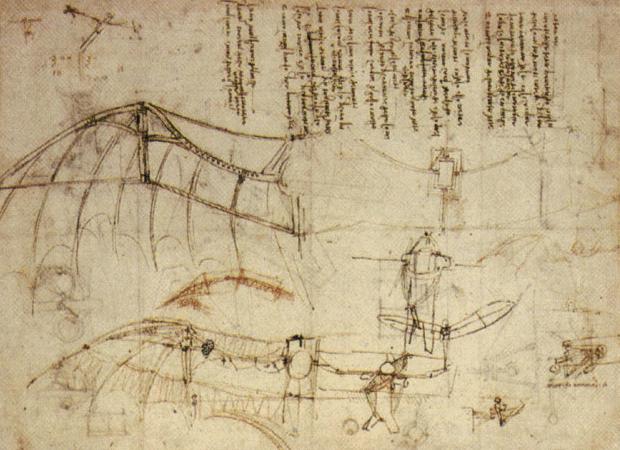
In designing his famous flying machine, Leonardo da Vinci took inspiration from bird flight. The inventor’s Codex on the Flight of Birds, details their behaviors and makes proposals for mechanical flight that would influence the development of the first modern airplane hundreds of years later.
Birds aren’t the only animals to influence scientific progress. For many years scientists have sought to unlock the extraordinary qualities of shark skin, which has huge advantages for both increasing speed and repelling germs. Recently, Walmart filed a patent for the creation of a swarm of robotic bees which they hope to use for the autonomous pollination of crop fields. Perhaps unsurprisingly, the humble original is perfectly designed for the task.
This article was originally written for the RE•WORK guest blog. This week YouTheData.com founder, Fiona McEvoy, will speak on a panel at the San Francisco Summit.

The world is changing, and that change is being driven by new and emerging technologies. They are evolving the way we behave in our homes, work spaces, public places, vehicles, and with respect to our bodies, pastimes, and associates. All the time we are creating new dependencies, and placing increasing amounts of faith in the engineers, programmers and designers responsible for these systems and platforms.
As we slowly begin to delegate tasks that have until now been the sole purview of human judgment, there is understandable trepidation amongst some factions. Will creators build artificially intelligent machines that act in accordance with our core human values? Do they know what these moral imperatives are and when they are relevant? Are makers thoroughly stress-testing deep learning systems to ensure ethical decision-making? Are they trying to understand how AI can challenge key principles, like dignity and respect?

Cathy O’Neil’s now infamous book, Weapons of Math Destruction, talks about the pernicious feedback loop that can result from contentious “predictive policing” AI. She warns that the models at the heart of this technology can sometimes reflect damaging historical biases learned from police records that are used as training data.
For example, it is perfectly possible for a neighborhood to have a higher number of recorded arrests due to past aggressive or racist policing policies, rather than a particularly high instance of crime. But the unthinking algorithm doesn’t recognize this untold story and will blindly forge ahead, predicting the future will mirror the past and recommending the deployment more police to these “hotspot” areas.
Naturally, the police then make more arrests on these sites, and the net result is that the algorithm receives data that makes its association to grow even stronger.

It may not seem like it, but there is quite an arms race going on when it comes to interactive AI and virtual assistants. Every tech company wants their offering to be more intuitive…more human. Yet although they’re improving, voice activated tech like Alexa and Siri are still pretty clunky, and often underwhelming in their interactions.
This obviously isn’t great if developers want to see them entering the workplace in such a way as to supercharge sales. Continue reading

Fraudsters typically line their pockets by forging our signatures, cloning our credit cards, and stealing our personal identities. Yet, we’d like to think that folks who know us personally – our family, friends, colleagues, and acquaintances – would catch these counterfeiters out if they brazenly claimed to be us in public. After all, seeing is believing isn’t it? If you don’t look like me, you’re not me. If you do look like me, the chances are that you are me. Right?
Well…maybe. And this could soon become the subject of some confusion.
But how?
Well, imagine if stealing your identity could include stealing your image. And if scammers could then use that image to put words in your mouth and – in some cases – fake your very actions. This isn’t just some outlandish thought experiment, but a foreseeable hazard if we fail to prepare for a surge in the production of “deepfakes”. Continue reading

Remember VHS? Or downloading music onto your iPod? If you do, the chances are it doesn’t seem too long ago – and that’s because it wasn’t. At least not in the scheme of things.
Think about it.
Our ancestors were stuck with pen and ink for a good long while before those clacky, qwerty typewriters came along. Similarly, it took millennia for us to eventually switch our stirrups for steering wheels (and, alas, lose those well-honed riding skills!). In more recent history, video did indeed kill the radio star, and smartphones killed-off just about every other mode of communication…
But technological evolution does not end here. As we speak, AI innovators are dreaming up new ways to automate the daily processes we currently take for granted. So, as we forge ahead into a new(ish) world of bots and blockchain, which fundamental parts of our lives will soon seem as charming as carrying a handkerchief…?
(And what kinds of opportunities might emerge?) Continue reading
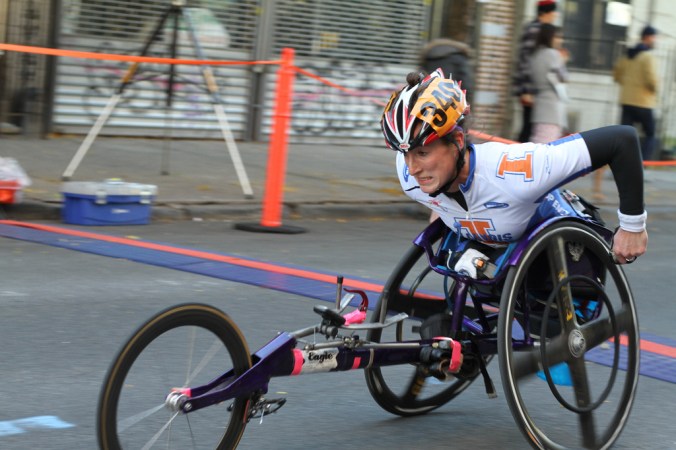
Jenny Morris – a disabled feminist and scholar – has argued that the term “disability” shouldn’t refer directly to a person’s impairment. Rather, it should be used to identify someone who is disadvantaged by the disabling external factors of a world designed by and for those without disabilities.
Her examples: “My impairment is the fact I can’t walk; my disability is the fact that the bus company only purchases inaccessible buses” or “My impairment is the fact that I can’t speak; my disability is the fact that you won’t take the time and trouble to learn how to communicate with me.”
According to Morris, any denial of opportunity is not simply a result of bodily limitations. It is also down to the attitudinal, social, and environmental barriers facing disabled people. Continue reading
It might not be a question you’re asking yourself right now, but according to a California-based developer of artificially intelligent sex robots, they will be soon be as popular as porn.

This is, at least, the hope of Matt McMullen. He’s the founder of RealDoll, a “love doll” company featured in the documentary, “The Sex Robots Are Coming”. The film seeks to convince its audience that combining undeniably lifelike dolls like Matt’s with interactive, artificially intelligent features will lead to an explosion in the market for robotic lovers.
But is this okay? Many say that it absolutely isn’t. Continue reading

The beginnings of the internet seem so long ago to those of us who lived through them. Hours spent trawling through pre-Google search results, which often ranged from the useless to the bizarre. Blindly researching gifts and listening to music, sans intelligently selected recommendations. Checking social media accounts of our own volition, rather than through prompting from “notifications”.
Then the world began to change.
Under the banner of convenience, clever algorithms started to adapt both to our interests and – critically – the interests of commercial entities. We saw (or rather didn’t see) the covert introduction of the digital “nudges” that now regularly play upon our cognitive blind spots, and work to “guide” our decision-making. Continue reading
 You The Data